B2B Marketing to Nonprofits: SEO and AI Visibility Benchmark Report
Highlights
This is a first look at how B2B vendors selling to nonprofits are performing on search and AI visibility in 2026. Here’s what the data shows:
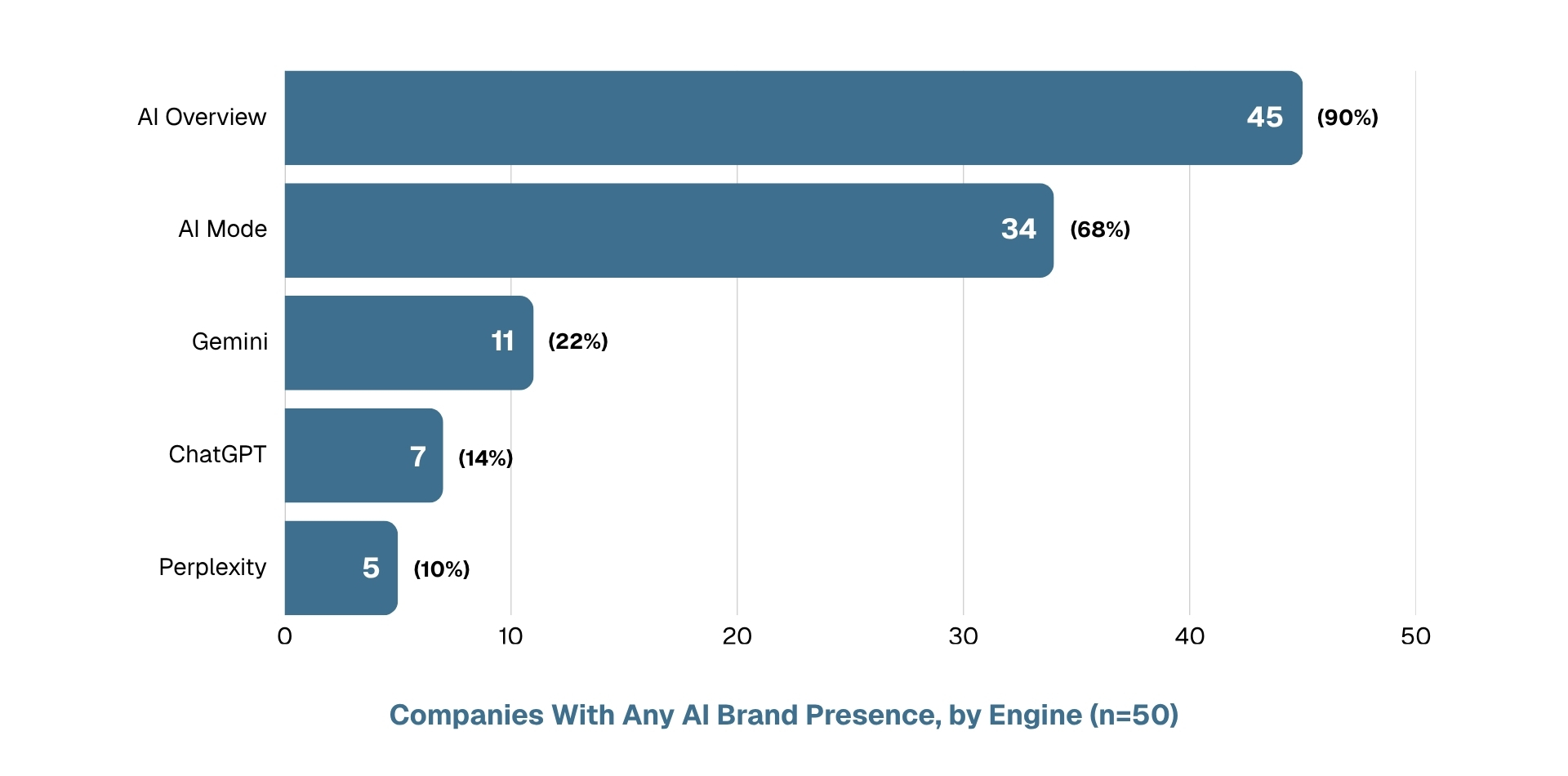
- AI visibility is concentrated on one surface. 90% of companies appear in Google’s AI Overviews, but only 22% appear in Gemini, 14% in ChatGPT, and 10% in Perplexity — visibility does not transfer evenly across AI engines.
- AI opportunity scales with organic strength. Companies with the largest AI-search opportunity are the same companies leading in organic traffic, keyword coverage, and domain authority — there is no shortcut to AI visibility that skips SEO fundamentals.
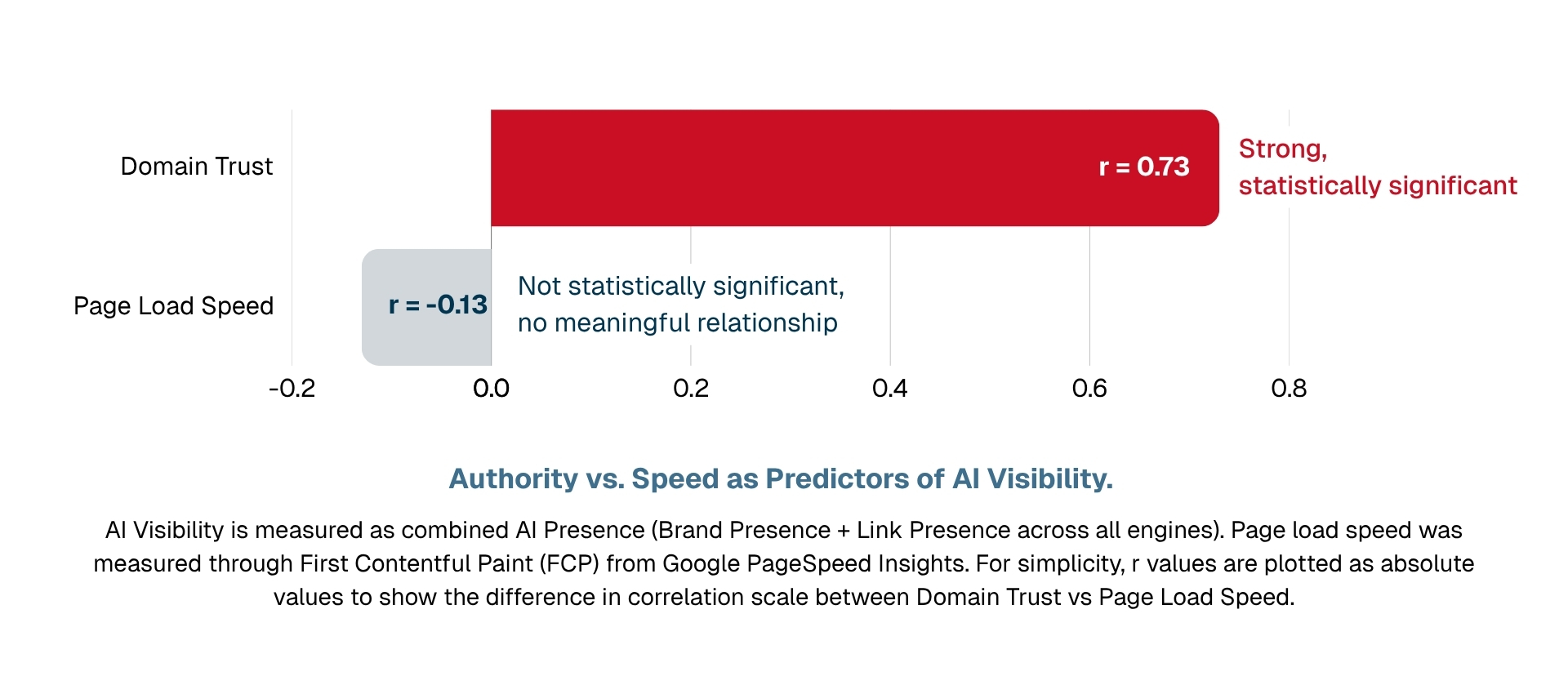
- Authority predicts AI visibility more reliably than site speed. Domain Trust shows more than 5x the correlation strength with AI visibility compared to page load speed.
- Organic search is a long tail. The top 5 companies capture 71% of all organic traffic in the sector. The median company gets just 486 organic visits a month — 50x less than the median of the top 5. There is much room for the sector to grow in this aspect.
- 96% of companies are either strong on both organic and AI visibility, or weak on both. Fewer than 5% show a lopsided profile — reinforcing that organic and AI visibility move together, not separately.
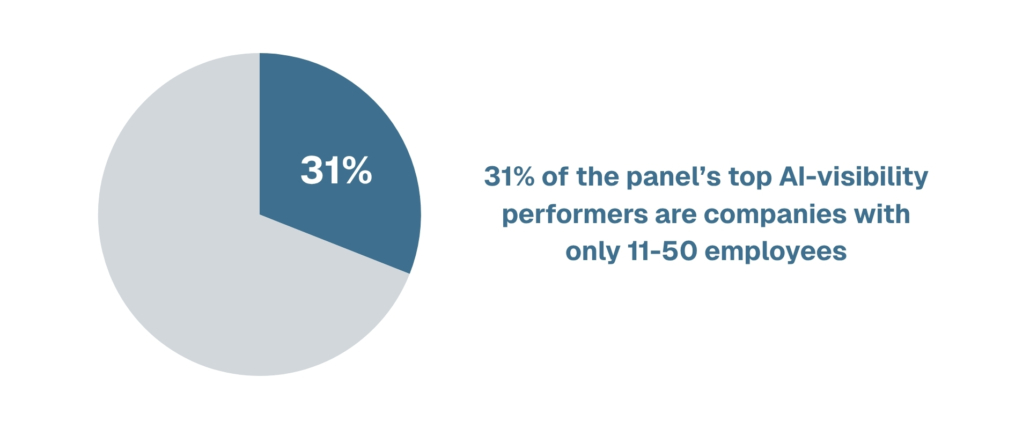
- Company size only loosely predicts performance. 31% of the panel’s top AI visibility performers are companies with only 11-50 employees.
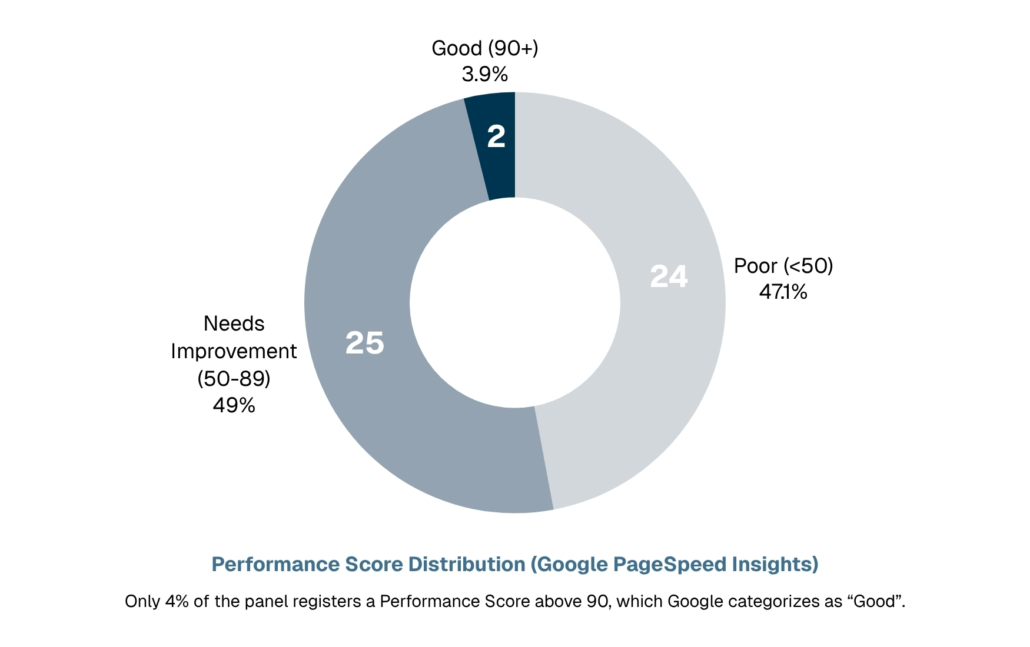
- Nearly half the sector has a slow website. 47% of companies score in Google PageSpeed’s “Poor” performance band, and only 4% score “Good.”
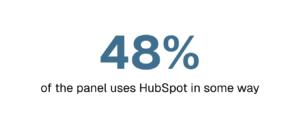
- A big chunk of the panel runs on Hubspot. 48% of the panel uses HubSpot in some form, but adoption is piecemeal and varies per business type.
About the panel
- Panel: 51 B2B companies selling into the nonprofit sector validated for fit
- Data sources: SE Ranking (organic SEO metrics and AI/GEO visibility across ChatGPT, Perplexity, Gemini, AI Mode, and AI Overviews), Google PageSpeed Insights (site performance and Core Web Vitals), and martech signals (CMS, marketing automation, analytics).
- AI-visibility metrics use n=50 (one company was excluded from AI-specific analysis due to a data-quality issue with its AI visibility pull; it is retained for every other metric).
- Segmentation: every company sorted into one of 5 business types
- Fundraising & Development — donor CRM and fundraising platforms, capital-campaign and planned-giving consulting, auction fundraising tools, donor prospect research, in-kind & cause-merch fundraising
- Program & Operations SaaS/Platforms — grants management, board management, membership systems, case management, volunteer management, and similar software
- Strategy, Program & IT Consulting — general nonprofit management consulting, IT and Salesforce.org consultancies, executive search/staffing, HR consulting
- Financial, Accounting & Compliance — CPA and accounting firms for nonprofits, insurance for nonprofits, nonprofit fund-accounting software
- Marketing and Events — marketing and communications agencies, event platforms/services, and other marketing/creative services targeting nonprofits
Research Findings | AI Visibility
1. The Sector Has a Foothold in Google’s AI Answers — and Almost Nowhere Else
If a CMO in this sector asks, “are we visible in AI search?” — the honest answer today is: only on one surface.
Across the panel, 45 of 50 companies (90%) show up somewhere in Google’s AI Overviews, and 34 of 50 (68%) show up in Google’s AI Mode. That drops off sharply elsewhere: only 11 of 50 (22%) show up in Gemini, 7 of 50 (14%) in ChatGPT, and just 5 of 50 (10%) in Perplexity.
Even though AI Overview, AI Mode, and Gemini are all Google properties, the data makes clear that appearing on one doesn’t mean appearing on another — it’s meaningfully harder to gain a foothold in AI Mode and Gemini than in AI Overview itself, let alone in ChatGPT or Perplexity.
CMO TIP Find out where your actual buyers search for vendor shortlists. Do they ask ChatGPT? Google’s AI Overviews? Claude? Gemini? Visibility doesn’t transfer evenly across engines, so this determines where your effort should go first.
2. Size Isn’t a Hindrance to AI Visibility – Smaller Companies Are Proving It
Among the panel’s top quartile of AI-visibility performers, nearly one in three (31%) are companies with only 11–50 employees.
That means a meaningful cluster of small teams have already broken into the top tier of AI visibility in this sector, which is proof of concept, not an outlier.
3. Authority Outweighs Speed as an AI-Visibility Predictor — But Speed Still Has to Clear a Bar
Conventional AI-SEO wisdom treats page speed as a gatekeeper: if a bot can’t fetch your content before it times out, you don’t exist in the answer. Our panel suggests that’s overstated — but not wrong.
Across the panel, how fast a page loads shows only a weak, statistically insignificant relationship to AI visibility. Domain Trust — a proxy for how much of the web already vouches for a brand — is a far stronger predictor: more than five times the effect size, and comfortably clearing statistical significance.
That doesn’t mean speed is irrelevant. It means speed likely isn’t a dial you turn for AI visibility — it’s a bar you clear. The panel’s handful of genuinely fast sites do show meaningfully higher AI visibility than the rest, but past that point, being merely sluggish and being outright slow look about the same. That’s consistent with a threshold effect, not a straight line.
For a CMO choosing between a site-speed sprint and an authority-building campaign: fix speed enough that it stops being a liability, then put the marginal budget into the offsite footprint — backlinks, citations, mentions — that authority metrics are capturing.
4. AI Opportunity Isn’t a Separate Lever — It Scales With the Organic Footprint You’ve Already Built
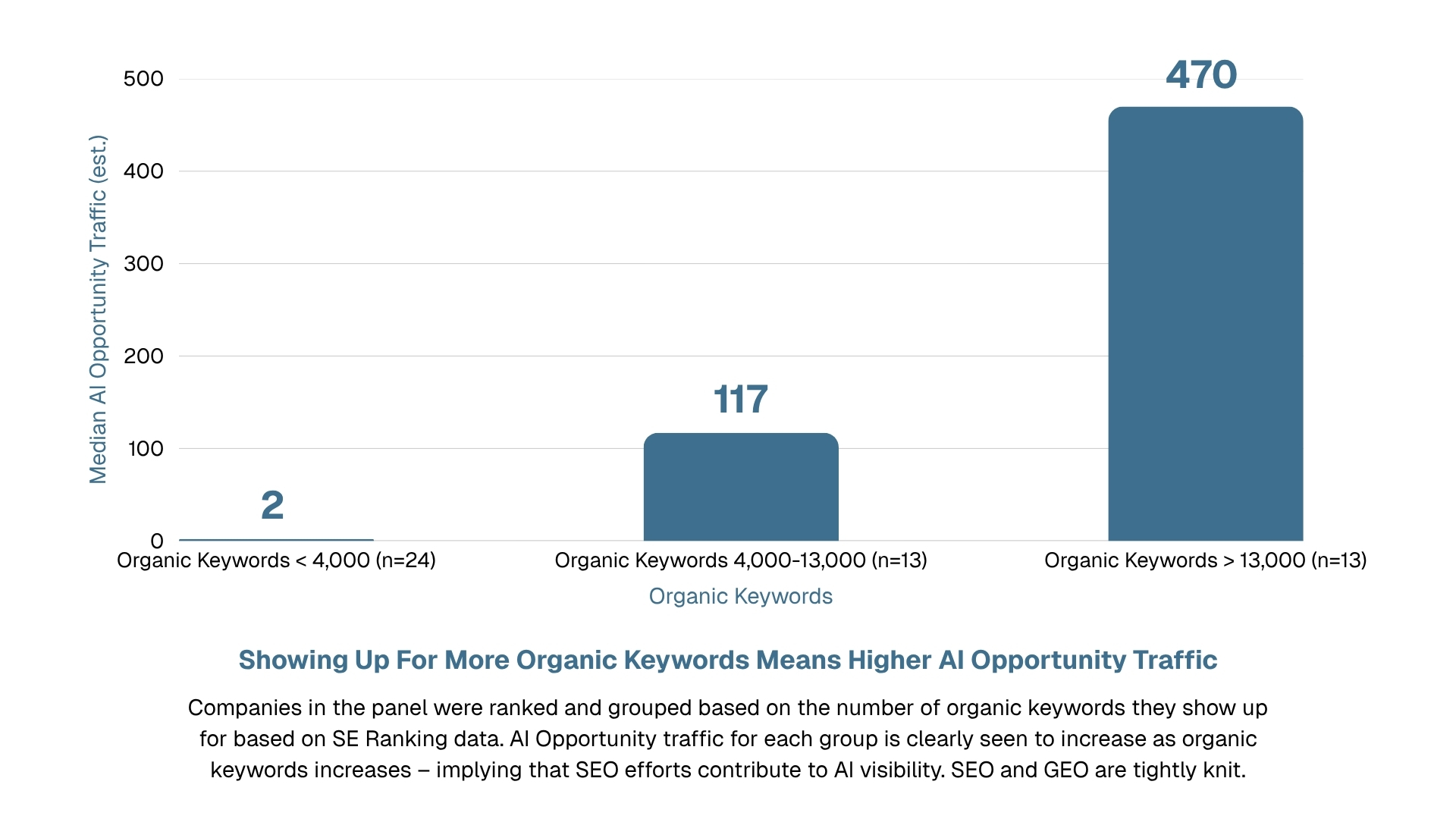
The companies with the largest AI opportunity traffic are the same companies already dominant in SEO metrics such as organic traffic, organic keywords, and domain trust.
For CMOs, this demonstrates that there’s no shortcut where a company with a weak organic footprint “skips ahead” by treating AI visibility as a separate initiative. The data shows that the fundamentals that grow organic traffic and keyword coverage are the same fundamentals that expand a company’s AI-search upside. Fix the organic foundation first. The AI opportunity grows with it, not around it.
Research Findings | Organic Search
1. A Handful of Companies Capture Most of the Sector’s Organic Traffic — Most of the Field Hasn’t Maximized the Channel Yet
A small number of vendors account for almost all the organic search traffic in this category. The top 5 companies in the panel capture 71% of all organic traffic across the full 51-company sample; the top 10 capture 87%.
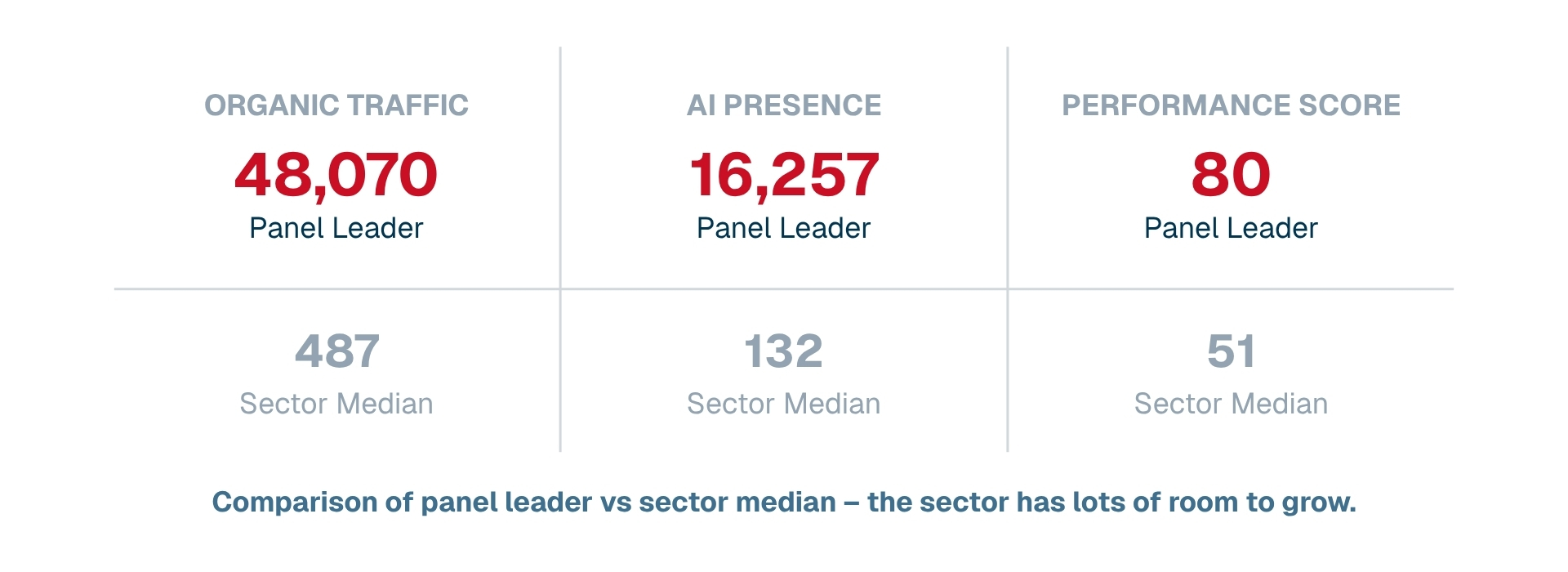
The typical company, meanwhile, gets a trickle: median organic traffic across the panel is just 486 visits a month.
That’s not a reason to shrug it off — it’s the opposite. For most companies selling into this sector, organic search is a genuinely underutilized channel, not a maxed-out one. The handful of leaders prove the ceiling is high; the fact that most of the field sits nowhere near it means there’s real, unclaimed room to grow for almost everyone reading this.
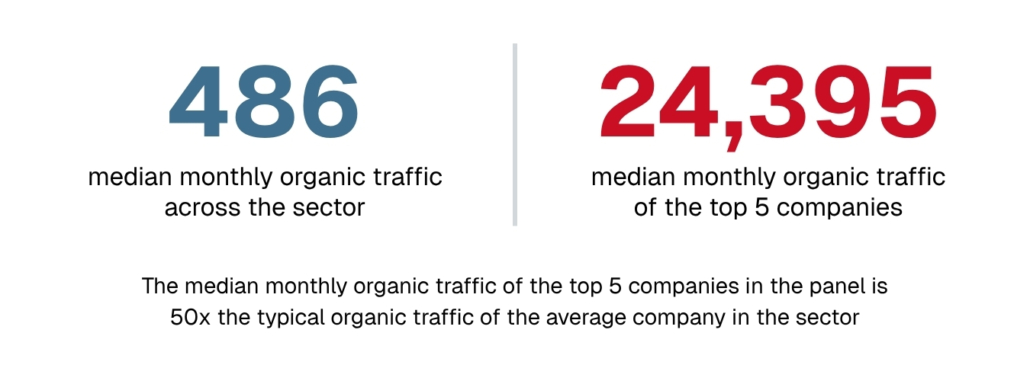
The median monthly organic traffic of the top 5 companies in the panel is 50x the typical organic traffic of the average company in the sector
2. Some Corners of the Sector Are Dramatically More Visible Than Others
Visibility in this sector isn’t evenly distributed across the kinds of companies that serve it. Program and operations SaaS/platform vendors see a median of 3,798 organic visits a month — the strongest showing of any category. Marketing and events firms see a median of just 92 — a more than 40x gap between the two.
Fundraising and development firms (1,446/month) and financial, accounting, and compliance firms (1,531/month) sit closer to the middle. Strategy and IT consulting firms (227/month) sit near the bottom, alongside marketing and events.
The same pattern shows up in Domain Trust — a proxy for how much link-based authority a site has accumulated — with SaaS/platform vendors at a median of 83 and marketing/events and strategy/IT consulting firms both down at 56–58. This isn’t noise from one or two large outliers; it’s a structural pattern across an entire category.
Benchmark metrics for organic traffic, domain trust, and referring domains per category
| Category | Median Organic Traffic per month | Median Domain Trust | Median Referring Domains |
|---|---|---|---|
| Program & Ops SaaS/Platforms | 3798 | 83 | 2737 |
| Fundraising & Development | 1446 | 75 | 1670 |
| Financial / Accounting / Compliance | 1531 | 70 | 518 |
| Strategy/IT Consulting | 227 | 58 | 364 |
| Marketing & Events | 92 | 56 | 288 |
These gaps are exactly the opportunity this report is meant to help you find — turn to the Category Benchmarks section for a more detailed table.
3. Authority Is a Strong, Reliable Predictor of Traffic — But It’s Not a Guarantee
Domain Trust and Referring Domains — two different ways of measuring how much of the web vouches for a site — both correlate strongly with organic traffic across the panel (r = 0.79 for each, both highly statistically significant). If you want to predict which companies in this sector get found, authority is the single best signal available in this data.
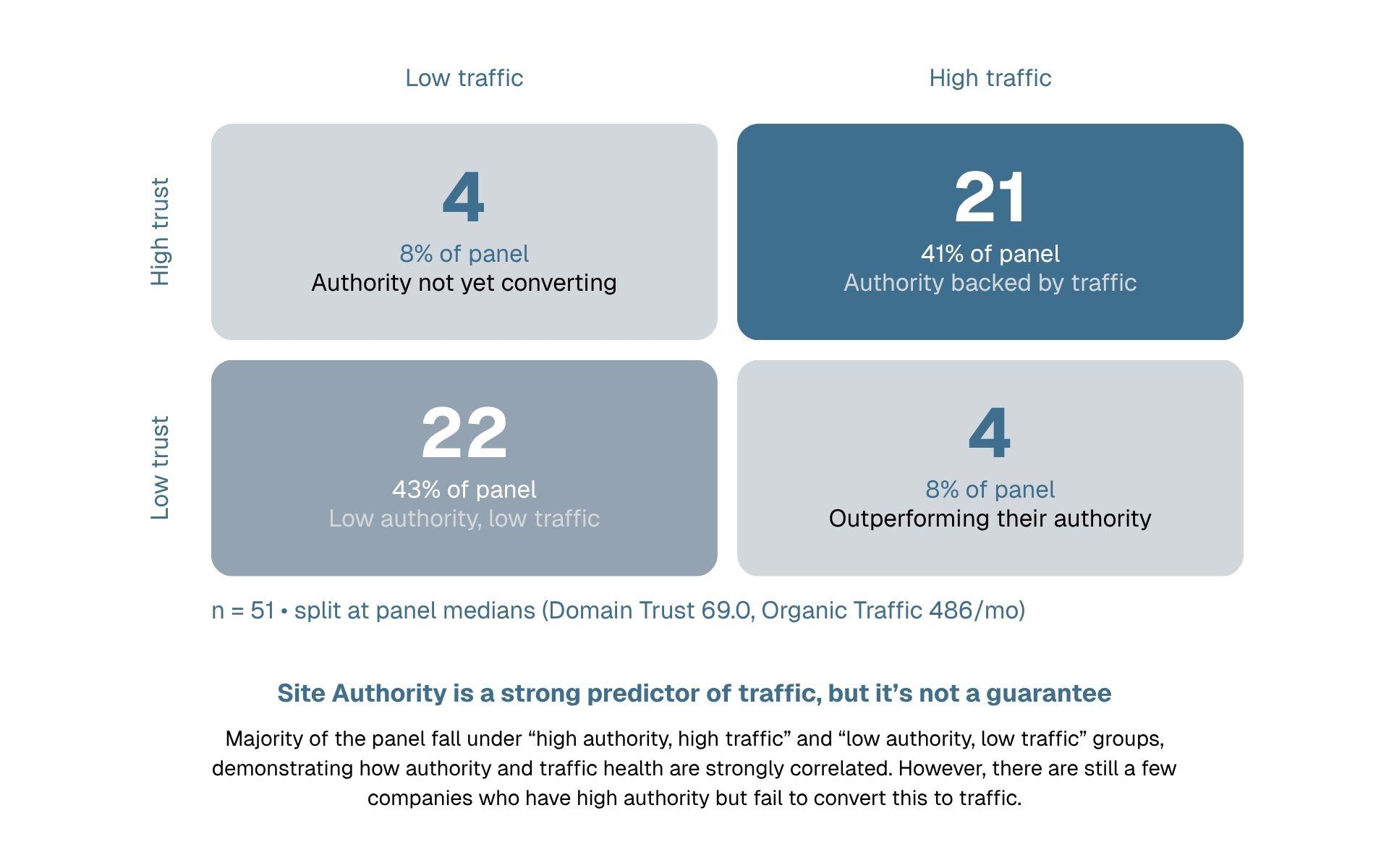
But “strong predictor” isn’t “guarantee.” Splitting the panel at the median for both Domain Trust and Organic Traffic surfaces two consistent quadrants — 41% of the panel is high-authority/high-traffic, and 43% is low-authority/low-traffic — but also two smaller groups worth a CMO’s attention: about 8% of the panel has built real authority that isn’t converting into visits, and another 8% is punching well above its authority weight on traffic, most likely through sharper keyword and content targeting.
In other words: authority is a strong predictor of traffic, but it’s not a guarantee. A company can build authority and still fail to convert it into traffic — that’s a content-and-targeting fix. Or a company can win on traffic well ahead of its authority level — a sign their content is already working, and building more backlinks and citations is the next lever to protect and extend that lead.
A PATTERN WORTH NOTING
Leaders Exist Across Every Metric in This Sector — Proof That Top-Tier Performance Is Achievable
One thing we observed: There are a handful of companies that excel across all measures. The panel’s top 2 companies by organic traffic are also its top 2 by Domain Trust, its top 3 by organic keyword footprint, and its top 3 by combined AI visibility. That consistency matters. The data shows that becoming a genuine category leader across multiple fronts simultaneously is possible in this exact sector, by companies that look, on paper, like most of the rest of the panel.
Research Findings | Site Health and Conversion Readiness
Nearly Half the Panel Is Running a “Poor” Site by Google’s Own Standard
Google’s PageSpeed scoring treats anything under 50 (out of 100) as its own “poor” performance band. Almost half the panel — 24 of 51 companies (47%) — lands there. Another 25 companies (49%) sit in the “needs improvement” band (50–89). Only 2 companies (4%) score in the “good” range (90+).
The median score across the panel is 51 — barely inside “needs improvement,” and a long way from good. For roughly half this sector’s marketers, the honest read is that leads are most likely being lost to a slow load time and poor UX.
With the predominantly “poor” performance, this is another underutilized opportunity for businesses in the sector to exploit. Head over to Google PageSpeed Insights and see how your company stands vs the sector.
Research Findings | Martech and Marketing Automation
Roughly Half the Panel Runs on HubSpot — the Other Half Is Competing Without a Real Marketing Automation Platform
Among the 46 companies where a site scan could successfully detect martech signals, 23 (50%) show a detectable marketing automation platform — almost all of it HubSpot (22 companies), with a single Marketo user rounding out the total. The other 23 show no detectable marketing automation tool at all.
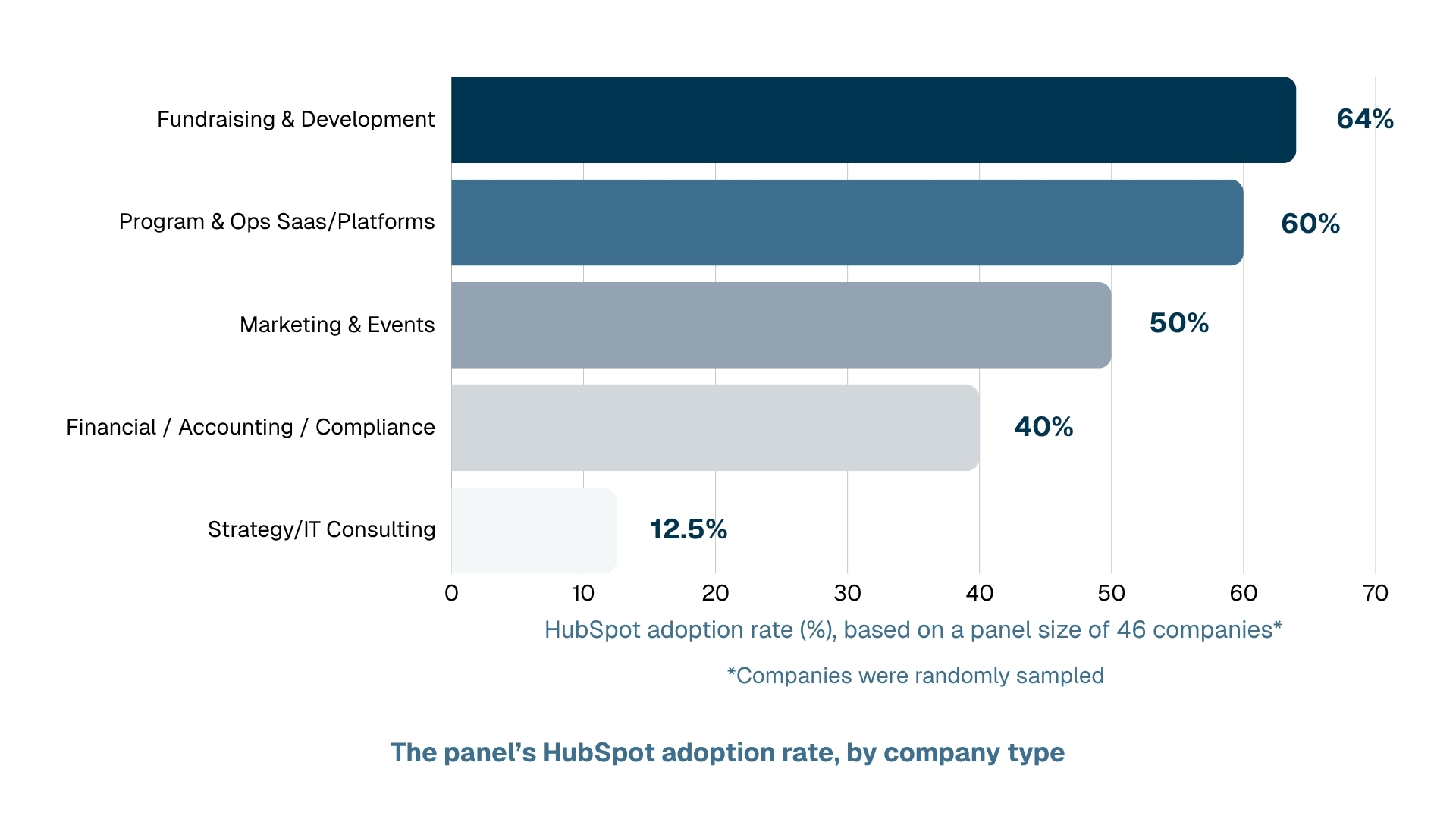
Adoption isn’t evenly spread. Strategy and IT consulting firms show just 12.5% HubSpot adoption, dramatically behind every other category (40–75%). Alongside this category’s weaker organic visibility, this suggests that this category under-invests in its own digital infrastructure.
HubSpot adoption is usually piecemeal; WordPress is still the dominant CMS.
Adoption is also often partial rather than complete: only 4 of 46 companies (9%) run HubSpot as a full CMS-plus-marketing-automation stack. The large majority of HubSpot users (18 of 22, or 82%) run their site on a separate CMS — usually WordPress — and use HubSpot purely as a marketing and automation layer bolted onto an existing site.
A PATTERN WORTH NOTING
Based on our panel data alone, companies with a HubSpot signal show roughly 4x more traffic and 5.7x more AI presence.
We can’t say adopting HubSpot causes this difference — correlation isn’t causation, and companies that invest in marketing automation likely also invest more broadly across the board.
But the association is large and consistent: companies with a HubSpot signal show roughly 4x higher median organic traffic and roughly 5.7x higher median AI-visibility presence than companies without one.
That’s worth investigating for your own organization, even if it isn’t proof of what would happen if you adopted the platform tomorrow.
Key Takeaways for CMOs
Winning at AI Visibility and Winning at Organic Search Are the Same Game – There’s No Separate “AI-Native” Path
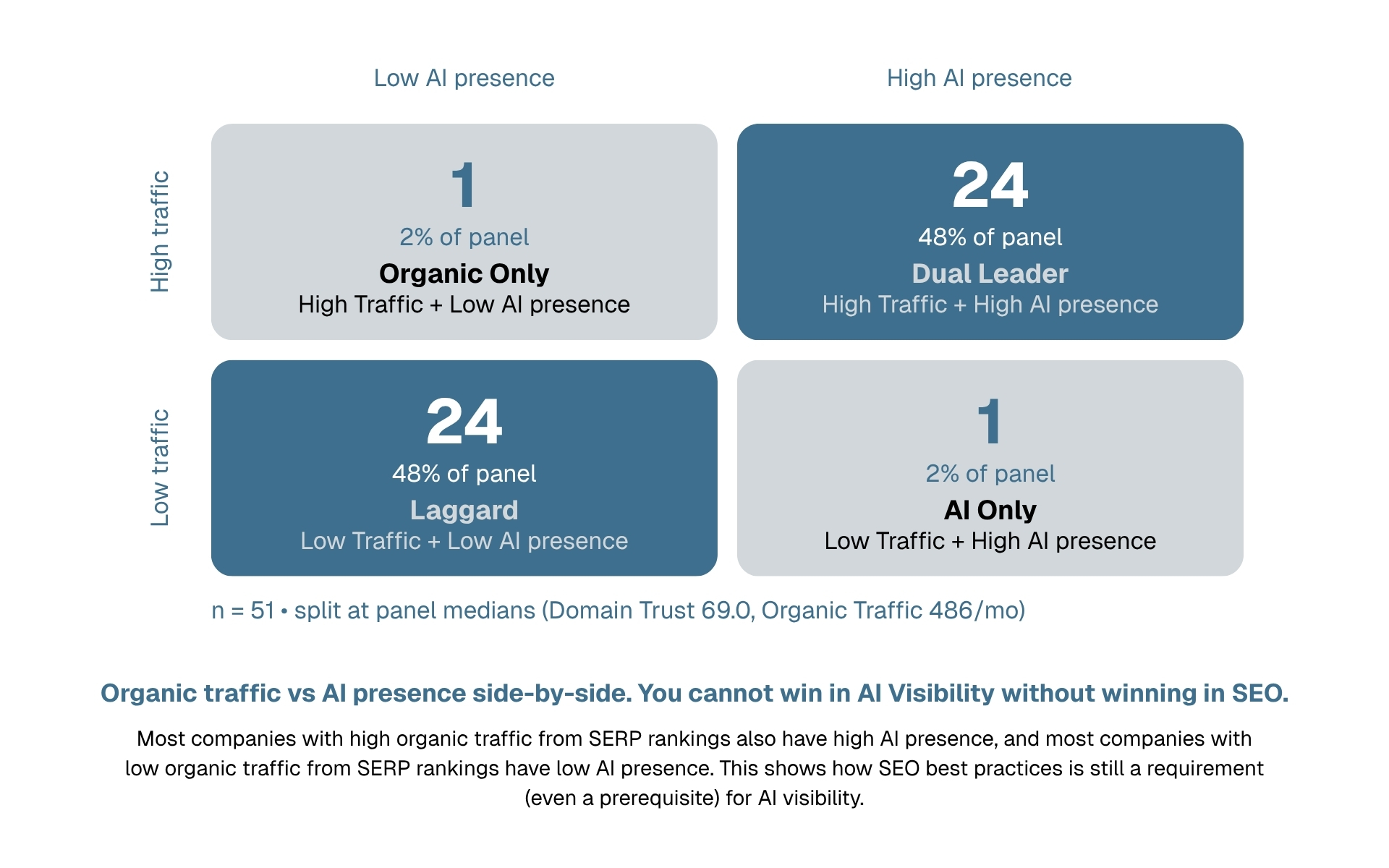
Splitting the panel at the median on both organic SERP traffic and combined AI visibility produces four possible archetypes. In practice, only two of them are common: 24 companies (48%) are Dual Leaders, strong on both organic and AI visibility together, and 24 (48%) are Laggards, weak on both.
That means that 96% of the panel fall into the two “consistent” categories. There is no shortcut path where a company skips organic-search fundamentals and wins on AI visibility alone, or vice versa. It supports the claim that SEO fundamentals are crucial to succeed in AI presence. The skills, content, and authority that produce one produce the other. SEO is not obsolete.
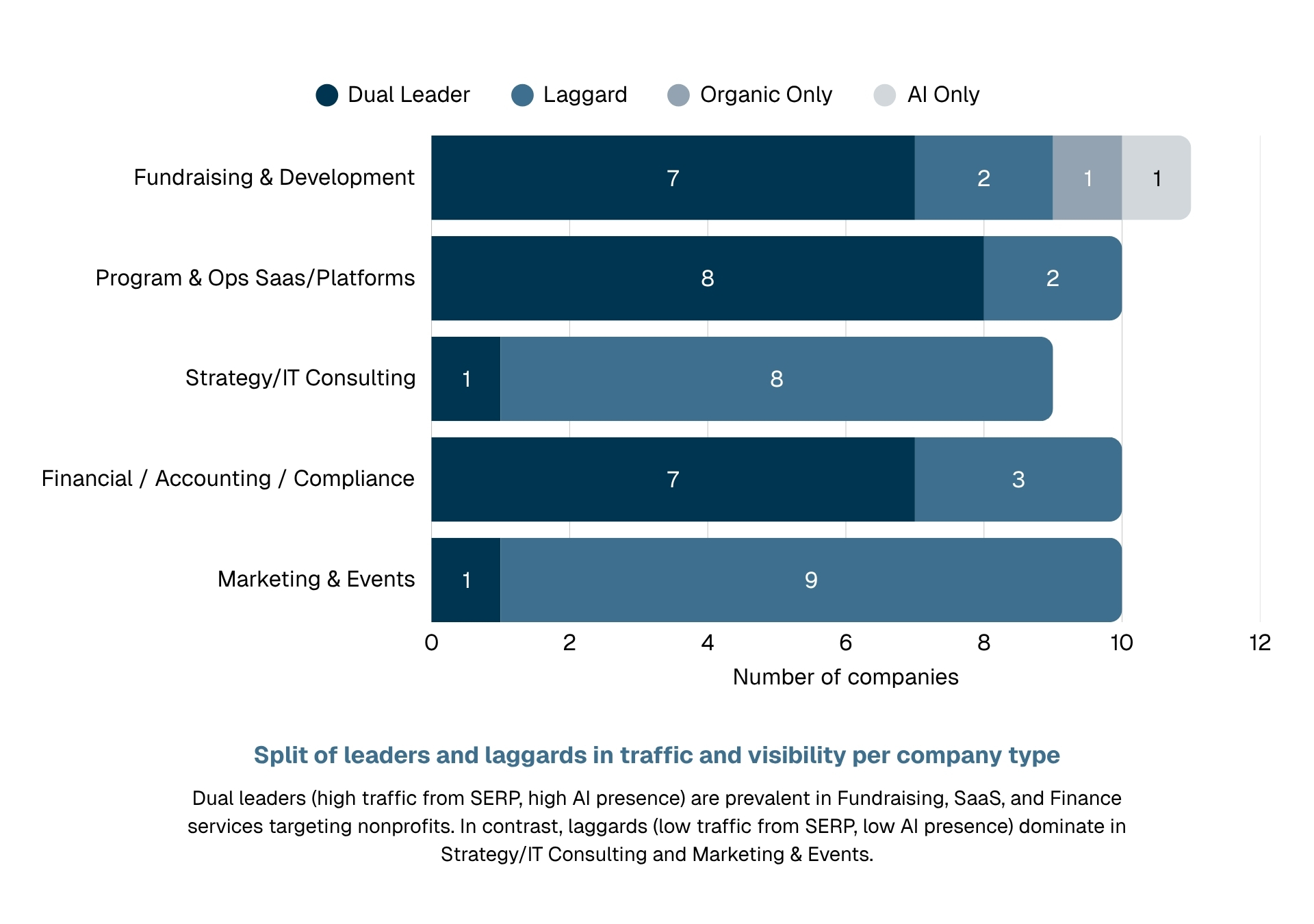
The split isn’t even across the sector’s categories. Financial/accounting/compliance and fundraising/development firms both land roughly 70% in the Dual Leader camp — a meaningfully healthier pattern than marketing/events firms, where 9 out of 10 companies in the panel are Laggards, or strategy/IT consulting, where 8 of 9 are Laggards.
There is no shortcut path where a narrow AI-optimization play substitutes for organic fundamentals. Budget for both together.
Small Companies Repeatedly Outperform Larger Ones — Size Is Not Destiny
Building a composite score across organic traffic, site performance, and AI visibility shows company size correlates moderately with overall performance — bigger companies do, on average, perform somewhat better. But the relationship is loose, not deterministic.
Of the panel’s 34 companies with 11–50 employees, 29% outrank every one of the panel’s three largest companies (500+ employees) on this composite measure. As stated in an earlier finding, 31% of the panel’s top quartile of AI-visibility performers are also companies in the 11–50 employee range.
This isn’t a single outlier proving an exception — it’s a real cluster of small teams beating the biggest players in the sector on the metrics that matter most.
The three largest companies in the panel land at the 9th, 13th, and 24th positions out of 51 on the composite ranking — solid, but each beaten by several smaller competitors.
Total Dominance Is Rare, But Proven Possible
Exactly one company in the panel ranks in the top 3 simultaneously on organic traffic, AI visibility, and site performance — the only company to crack all three fronts at once, out of 50 companies measured across every axis.
That company has fewer than 50 employees. It is proof that a small team, in this exact sector, can out-execute the entire field on every front that matters at the same time. Triple leadership is not impossible. For a company willing to build the playbook, that’s an open lane, not a closed door.
Treat site speed as a floor to clear, not a lever to maximize
Authority outweighs speed as a predictor of AI visibility in this sector’s data — but a genuinely slow site still costs conversions and, likely, AI-crawler access at the extreme end. Get your site out of the “poor” band, then redirect further budget toward authority-building rather than chasing marginal speed gains.
Category Benchmarks for B2B Vendors Selling to Nonprofits
A quick-reference table for readers who want to see how their specific category compares to the sector overall, independent of the narrative above.
| Category | Companies in the Panel | Median Organic Traffic per month | Median Domain Trust | Median Referring Domains | Median AI Presence | Median Page Speed | HubSpot Adoption |
|---|---|---|---|---|---|---|---|
| Fundraising & Development | 11 | 1446 | 75 | 1670 | 438 | 60.0 | 63.6% |
| Program & Ops SaaS/Platforms | 10 | 3798 | 83 | 2737 | 343 | 44.5 | 60.0% |
| Strategy/IT Consulting | 10 | 227 | 58 | 364 | 47 | 56.5 | 10.0% |
| Financial / Accounting / Compliance | 10 | 1531 | 70 | 518 | 419 | 48.5 | 40.0% |
| Marketing & Events | 10 | 92 | 56 | 288 | 18 | 51.0 | 50.0% |
Note: HubSpot Adoption reflects companies with any detectable HubSpot signal (CMS or marketing automation) among successfully-scanned sites in that category. Median AI Presence combines brand mentions and content citations across all five AI engines measured (AI Overview, AI Mode, Gemini, ChatGPT, Perplexity), n=50.
About the Authors

Kendall Lake
Kendall leads agency operations for Nexus Marketing, where she directs the account management, content, strategic partnerships, and new services divisions. She is passionate about helping clients in the mission-driven space reach their customers through impactful SEO, content, and digital marketing strategies.
A proud Double Dawg, Kendall earned her bachelor’s in journalism and her master’s in emerging media from the University of Georgia. Before joining Nexus, Kendall worked in presentation development and curation for TEDxUGA, one of the largest independently organized TEDx events.

Kristine Yu
Kristine oversees all marketing activities for Nexus Marketing itself, applying the same strategic discipline Nexus brings to client work toward building the agency’s own marketing engine.
She is experienced in marketing and communications in B2B SaaS and tech consulting, though she kickstarted her marketing and product management career in the food & beverage industry. With a background in the sciences, she carries an analytical, data-first lens into marketing strategies and decisions.

Maggie Chagoya
As leader of the Account Management team at Nexus Marketing, Maggie is dedicated to devising strategic marketing strategies for clients in the mission-driven sector. She specializes in building long-term organic authority and visibility that connects Nexus’s clients with their most important audiences. Under her leadership, the account management team seeks to develop relationships with clients and implement marketing solutions that drive ROI.
Maggie currently volunteers with LifeLine Animal Project in Atlanta. Advocacy for those with Intellectual and Developmental Disabilities is another cause close to her heart.