

The 15-Minute Pipeline X-Ray: How to Use HubSpot to Identify Funnel Leaks
Executive Summary
For RevOps teams, plugging funnel leaks is often more impactful than increasing lead volume. This guide details a tactical, 15-minute HubSpot diagnostic to identify stagnation in the MQL-to-SQL handoff and restore pipeline velocity.
The Revenue Gap
Here’s a hard truth: A healthy volume of Marketing Qualified Leads (MQLs) is a vanity metric if those leads never reach your revenue reports.
For many B2B organizations, the transition from Marketing to Sales is a high-risk “black hole” where hard-won momentum disappears. These gaps aren’t always data errors. They can represent significant wasted acquisition costs and missed revenue targets.
And in mission-driven sectors, buyers are often particularly risk-averse. Your nurture process must be intentional.
When a lead stalls in your CRM, it often signals a breakdown in the consistency and expertise needed to move a professional buyer forward. To fix the funnel, you have to see it clearly.
This 15-minute “X-Ray” exercise uses specific HubSpot views to move beyond surface-level metrics and pinpoint exactly where your deals are stuck.
What You’ll Need to Get Started
Before running this diagnostic, ensure your HubSpot instance is configured for data integrity:
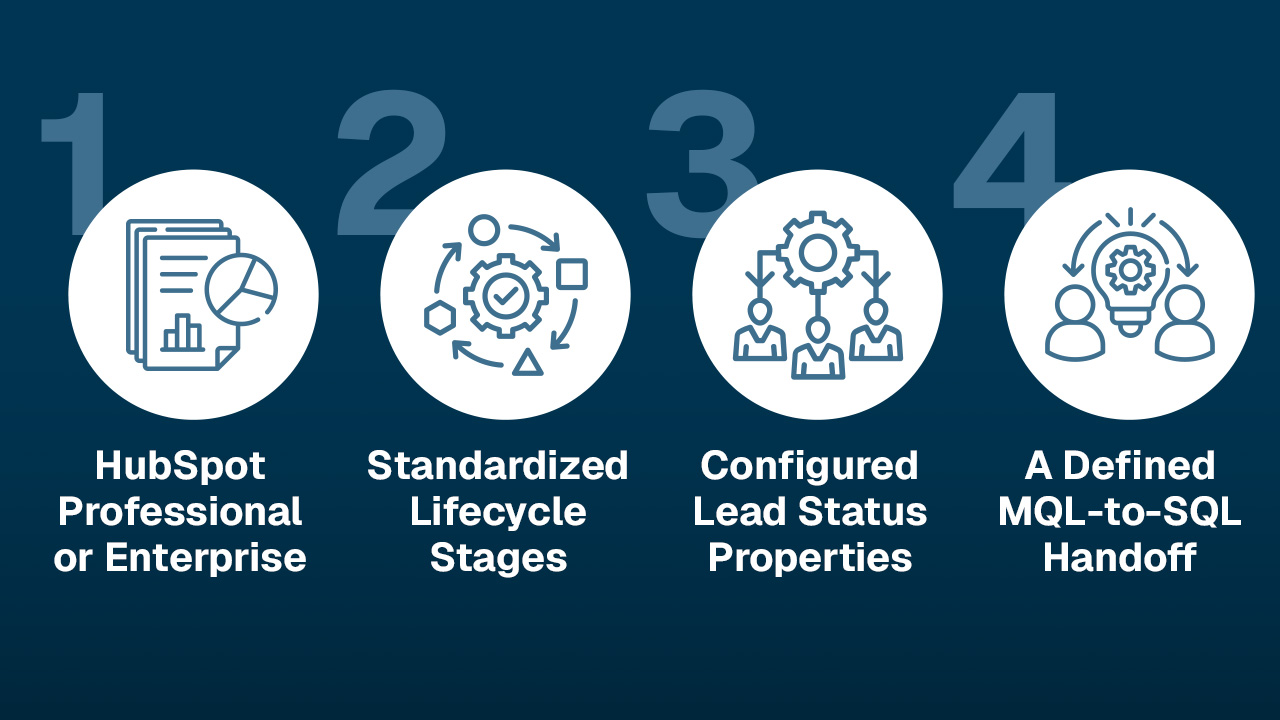
- HubSpot Professional or Enterprise: You’ll need advanced reporting features in the Marketing and Sales Hubs.
- Standardized Lifecycle Stages: These must be mapped correctly from Lead to Closed-Won to track transitions.
- Configured Lead Status Properties: These are essential for tracking the specific steps of sales follow-up.
- A Defined MQL-to-SQL Handoff: Clear internal workflows are required to create the consistency needed between departments.
6 Steps to Diagnose Pipeline Stagnation
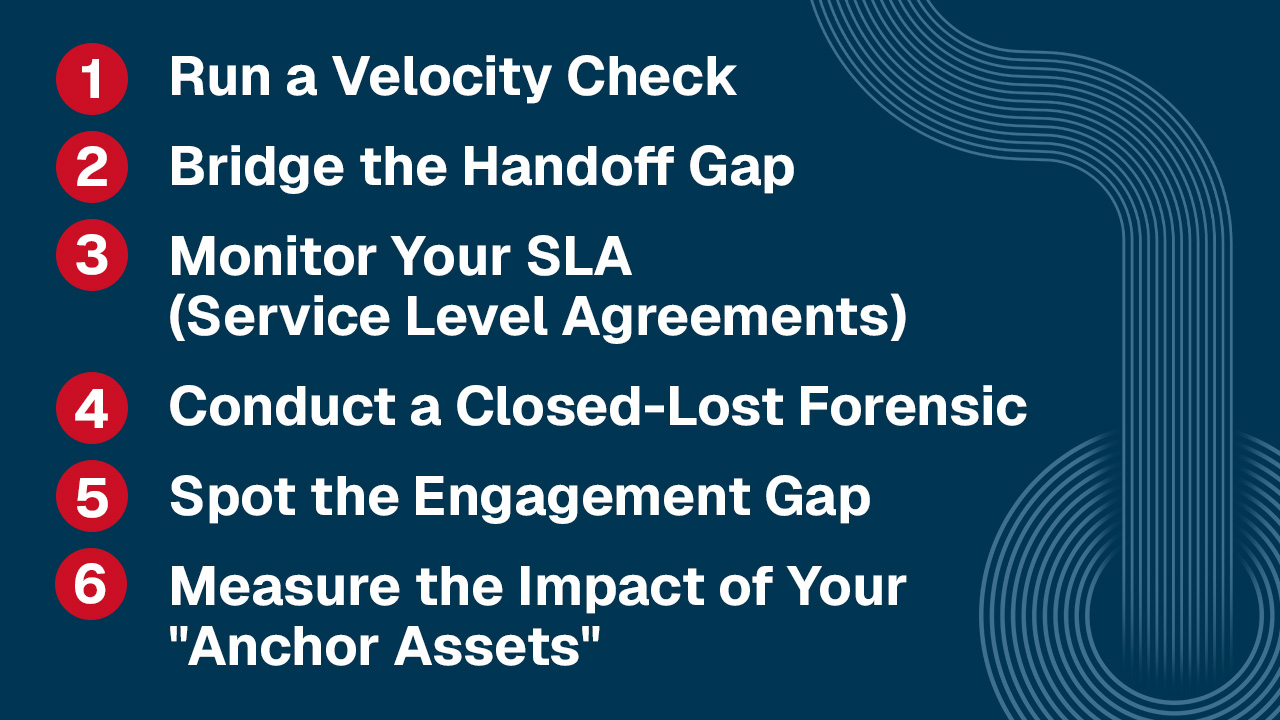
1. Run a Velocity Check
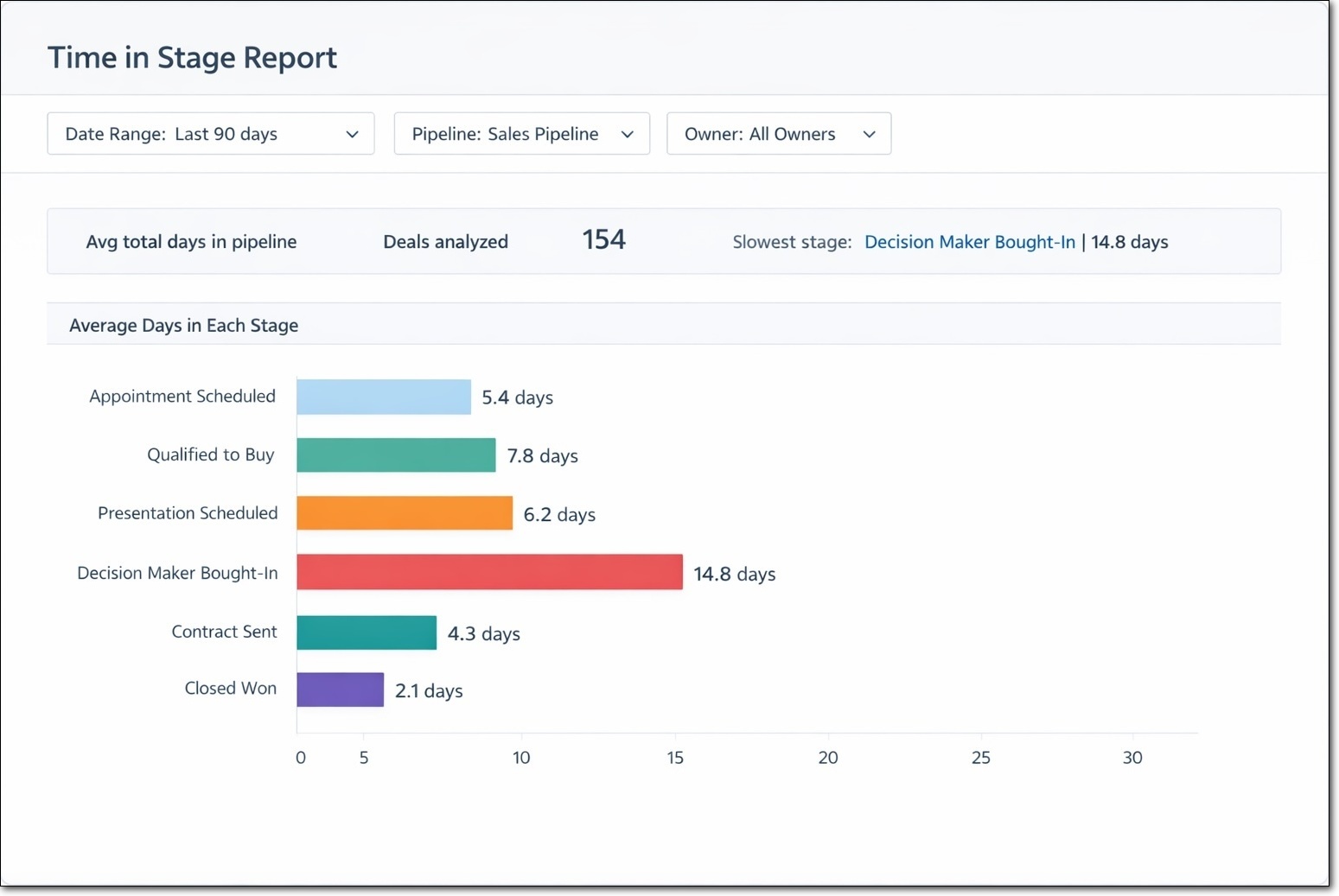
Use the Stage Discovery Report in the Sales Analytics tool to monitor the Time in Stage property. This lets you see how quickly leads are moving through your pipeline.
If leads are sitting in Discovery or Evaluation for more than 30 days, they aren’t just resting—they’re getting colder and increasingly unlikely to re-engage.
In today’s B2B environment, speed is a primary competitive edge. Stagnation at these middle-of-funnel stages usually indicates a friction point where the buyer hasn’t received the necessary information to de-risk the decision.
Use this report to identify the specific stage where your average “Time in Stage” exceeds your typical sales cycle.
2. Bridge the Handoff Gap
Compare your Lead Status vs. Lifecycle Stage reports to find where the handoff is failing. This is often where the most significant revenue is lost.
Think of it this way: The “truth” of your funnel lies in the discrepancy between marketing’s view and the sales team’s reality.
Look specifically for leads marked as MQL or SQL where the Lead Status remains “New.” If a lead sits in the “New” status for more than 48 hours, it suggests the handoff is broken. This gap often points to a lack of alert visibility for sales reps or a lack of accountability in the transition from marketing automation to human outreach.
3. Monitor Your SLA (Service Level Agreements)
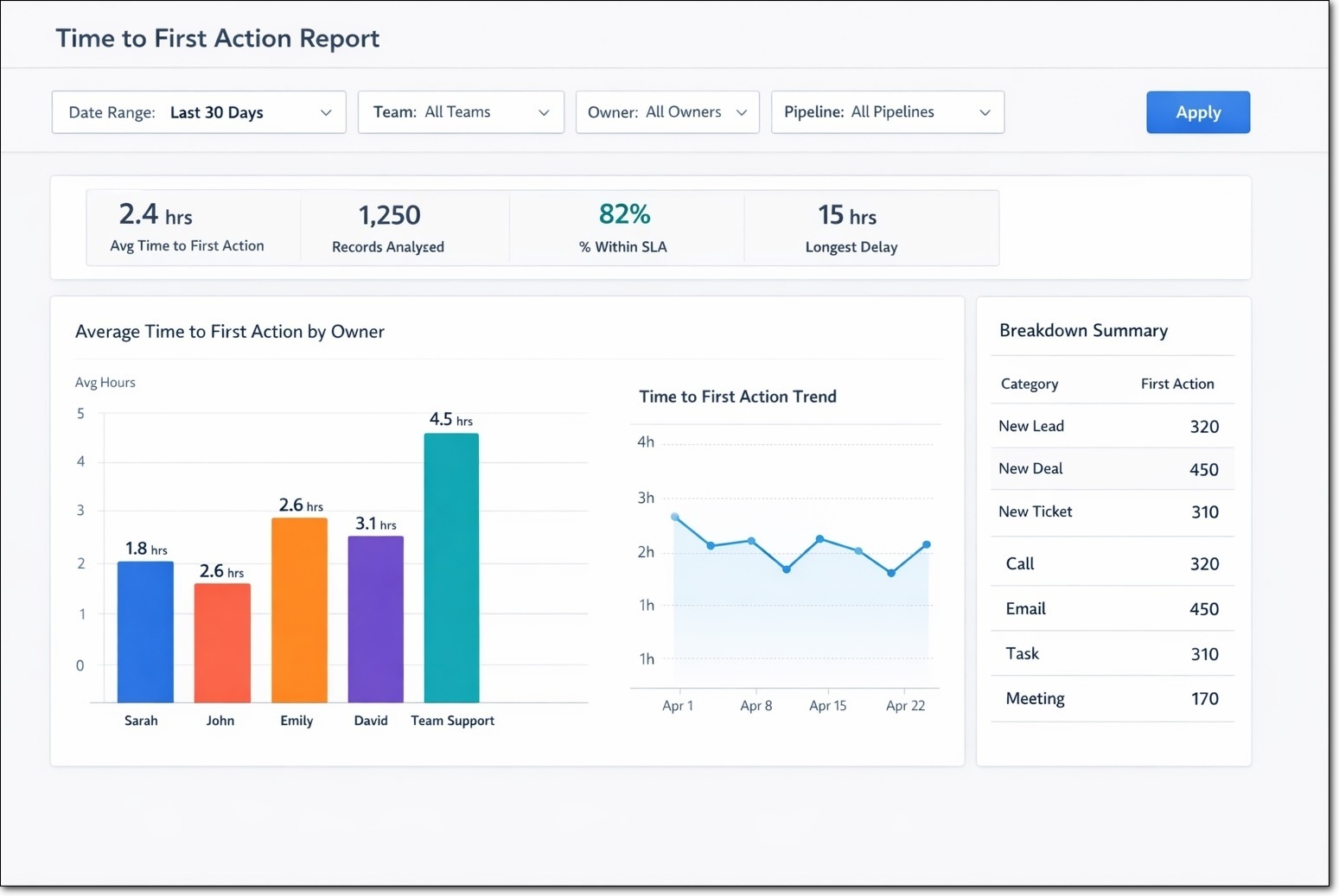
I recommend setting up a Time to First Action report to measure how quickly your team responds to fresh interest.
This can be done by using a simple workflow to date-stamp the moment a lead hits SQL and comparing it to the date of the first recorded sales activity.
Remember, consistency is what builds trust with buyers. A delay of even a few hours can significantly drop conversion rates. By actively measuring this “speed to lead,” you can identify if your team is reaching out while the prospect’s interest is still active (or if you are following up after the window of opportunity has closed).
4. Conduct a Closed-Lost Forensic
Don’t simply archive lost deals—treat them as primary research.
To do this effectively, ensure the Closed-Lost Reason is a required property for your sales team. This ensures that every deal that falls through leaves a trail of data you can use to adjust your strategy.
Analyze these reasons to find recurring patterns.
Is the issue consistently “Price,” “Competitor,” or “Timing”? If “Timing” is the dominant reason, your marketing-to-sales transition may be happening too early. This insight allows you to refine your lead scoring and ensure you only hand over leads that are truly ready for a sales conversation.
5. Spot the Engagement Gap
Filter your contacts by Last Engagement Date vs. Last Sales Activity.
This view often reveals high-fit leads who are actively on your site, consuming content right now, but have zero recorded sales calls or emails in their history.
These prospects are your most immediate opportunities. They are currently “self-educating,” but the lack of sales contact suggests they have been abandoned by the process. By surfacing these gaps, you can prompt your sales team to re-engage with these leads while they’re actively researching your services.
6. Measure the Impact of Your “Anchor Assets”
Use Multi-Touch Attribution Reports—specifically the Linear or U-Shaped models—to see which case studies, whitepapers, or demo videos appear in the journey of “Closed-Won” deals.
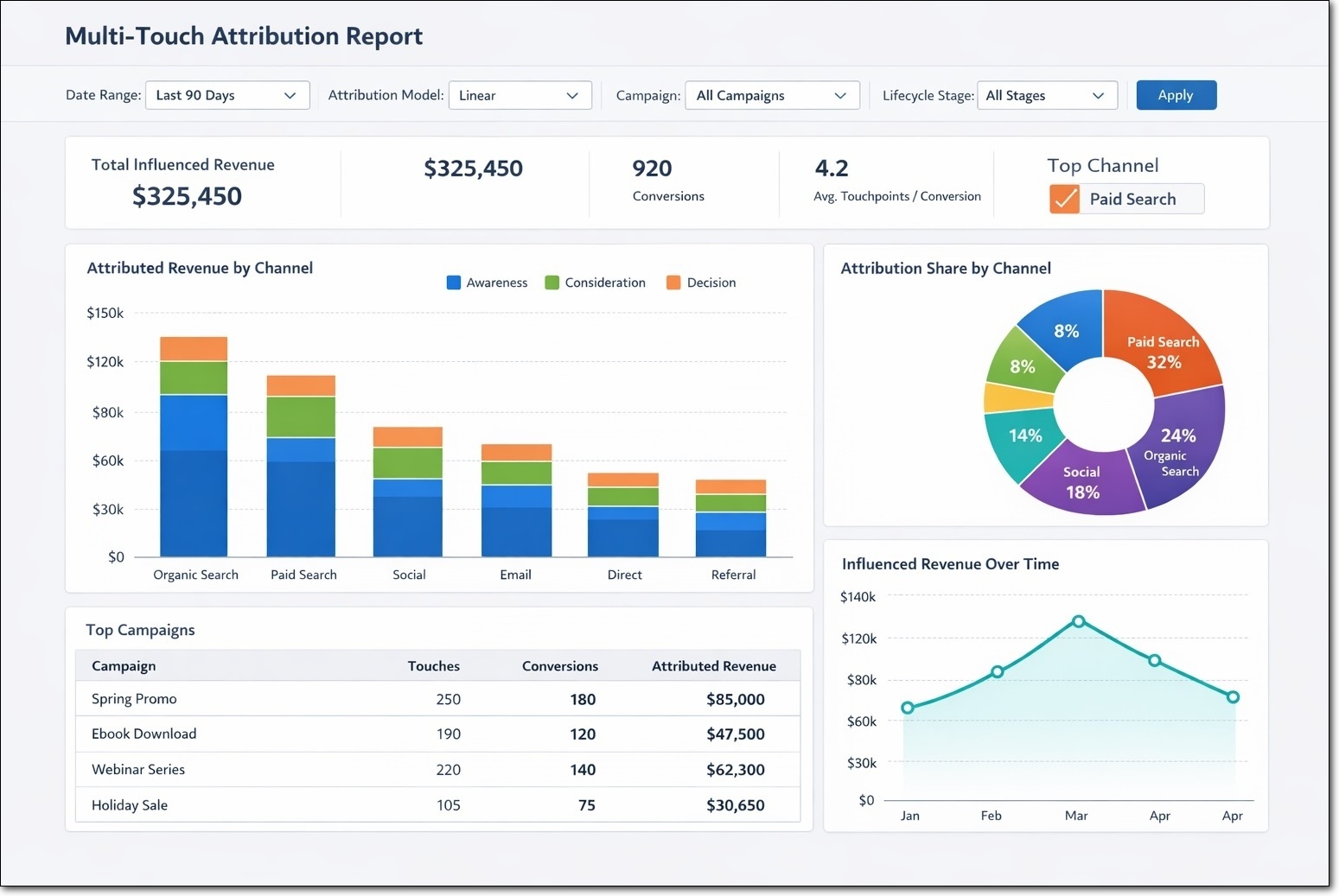
This moves your reporting away from vanity views and toward tangible pipeline impact.
To drive the greatest impact, your marketing needs to double down on content that actually drives sales.
Taken a step further, this means that if your top-performing “Anchor Assets” aren’t being utilized by Sales during the handoff or late-stage negotiations, you’re missing a primary tool for proving expertise. Use this data to prune content that doesn’t move the needle and prioritize the resources that do.
The RevOps Bottom Line
The aim of this diagnostic isn’t just to clean up data. It’s about identifying the friction points that prevent your team from closing deals.
By fixing these leaks at the most expensive part of your funnel—the handoff—you’ll move from a reactive strategy to a proactive, revenue-focused operation. Fixing a 5% leak here can be faster, more cost-effective, and just as impactful (if not more) as doubling your top-of-funnel traffic.
If you have any questions about this guide or want to learn more about how Nexus can support or enhance your RevOps systems, please check out our HubSpot services or contact us for a custom consultation.
Happy HubSpotting! 🧡

About the Author: Sarah Medilo, CPQC

Sarah Medilo is the Client Journey Specialist and RevOps Lead at Nexus Marketing, where she blends strategic rigor with a practitioner-first approach to GTM systems. With over two decades of experience working with global tech giants like Apple, Adobe, and Autodesk, Sarah has earned a reputation as the “glue” between complex CRM technology and the people who use it.
She previously led the top HubSpot Diamond Partner agency in the Philippines and served on the HubSpot Partner Advisory Council. A Gallup-certified Strengths Coach, Certified Positive Intelligence Coach (CPQC), and an award-winning AI agent builder, Sarah is passionate about humanizing RevOps—moving teams away from “dirty data” and toward a culture of high-adoption, empathy, and sustainable growth. When she isn’t auditing funnels, she’s likely experimenting with new AI solutions or advocating for better emergency preparedness through tech.